
By SipHours Editorial · Published 2026-02-16 · Updated 2026-03-20 · 9 min read
Dark urine dehydration searches usually mean one thing: “Is my pee telling me to drink more?” Sometimes yes—as a lay check. Dark yellow urine can suggest concentrated waste when fluid intake has been low. It is not a medical diagnosis of dehydration, kidney disease, or liver disease. SipHours Editorial explains everyday interpretation, red flags that need clinicians, and how SipHours daily ml/oz goals plus waking-hour reminders help you respond without jumping blindly into a gallon challenge (~3.8 L). Population context still includes National Academies-style total-water ranges summarized by Mayo Clinic and CDC healthier-drink guidance. Individual needs vary; clinicians come first. SipHours is $0 forever with no in-app purchases on Android; iOS is coming soon.
What dark urine can mean in everyday life
BLUF: Pale straw to light yellow is a common everyday target for many healthy people; darker yellow can appear after low intake, overnight fasting, or heavy sweat. SipHours helps you raise logged fluids gradually—SipHours does not diagnose why urine is dark.
Urine color sits on a spectrum. First-morning urine is often darker because you have not drunk for hours; that alone is not an emergency. If color stays dark through a day of normal drinking, consider whether your SipHours goal is too low for the weather or workload—or whether something else is going on.
What dark urine does not automatically mean
BLUF: Dark urine ≠ proof you must drink a gallon of water a day. Vitamins, foods, medications, and illness can change color. SipHours Editorial challenges the “always chug a gallon” myth carefully.
- B-vitamin supplements often turn urine bright yellow.
- Beets, berries, and some dyes can shift color.
- Dehydration is only one possible explanation among many.
- Brown, tea-colored, red, or cloudy urine with pain or fever needs clinical evaluation—not a SipHours experiment.
For broader symptom context, see dehydration signs. SipHours remains a habit tool.
Dehydration as a lay concept versus clinical diagnosis
BLUF: Feeling thirsty, dry mouth, headache, and darker urine are everyday clues people use. Clinicians use history, exam, and sometimes labs. SipHours never replaces that process.
If you suspect significant dehydration—especially in infants, older adults, or during illness with vomiting or diarrhea—seek medical care. Do not attempt to “fix” serious dehydration solely by forcing a gallon of water daily. Rapid overcorrection can be harmful; hyponatremia risk rises when huge water volumes are drunk too fast.
How much to drink when urine looks dark
BLUF: Start by meeting a personal SipHours goal informed by National Academies–style ranges, not by defaulting to 3.8 L. Many adults use drink-focused starts near ~2.1–2.7 L, then adjust.
| Observation (lay) | Sensible next step | SipHours action | Avoid |
|---|---|---|---|
| Slightly dark after a dry morning | Sip steadily | Log morning water; keep hourly reminders | Ignoring thirst all day |
| Dark after heat or workout | Replace fluids over hours | Raise SipHours goal that day; custom logs | One massive chug |
| Dark despite high intake | Consider non-hydration causes | Keep logging; contact clinician | Blind gallon challenge |
| Dark + pain/fever/confusion | Urgent clinical care | Pause aggressive self-experiments | Self-diagnosis via blogs |
Read how many gallons of water should you drink a day for unit conversions and drinking a gallon of water a day for challenge myths.
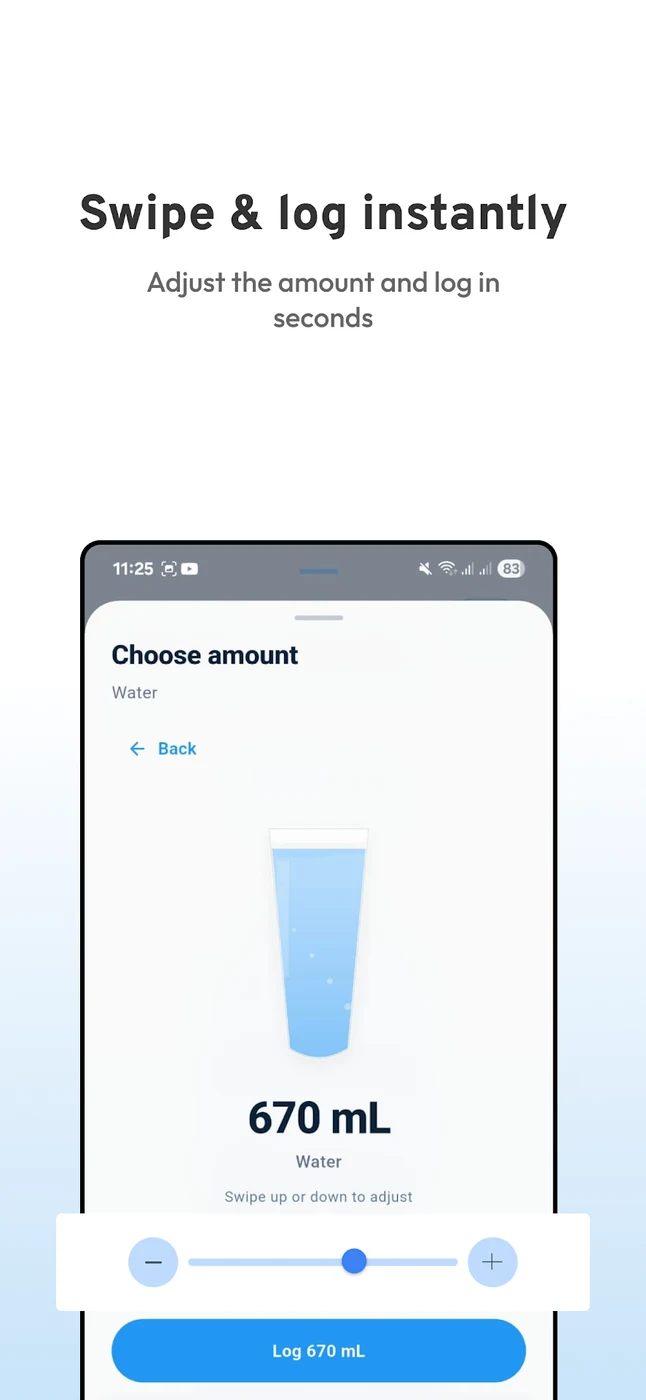
Connecting urine color to SipHours habits
BLUF: The useful loop is observe → sip → log → review—not observe → panic → gallon jug.
- Set a SipHours baseline in ml or oz you can finish.
- Enable waking-hour reminders so afternoon gaps do not create evening dark-urine catch-up.
- Log every sip so you know whether intake actually dropped.
- Review SipHours history after hot days or travel.
- Escalate to a clinician when color changes persist or warning symptoms appear.
SipHours progress percent answers “did I drink my plan?”—it does not answer “what disease do I have?”
Gallon challenge temptation when urine is dark
BLUF: Dark urine often motivates people to try a gallon of water daily. That leap can be too much. Prefer paced increases inside SipHours.
If your usual SipHours goal is 2,200 ml and urine has been dark during a heat wave, try 2,600–3,000 ml with hourly pacing before considering ~3,785 ml. See gallon of water daily for safe high-volume schedules if a clinician supports them.
Other dehydration-related signs to watch (still not a diagnosis)
BLUF: Cluster everyday signals; do not rely on urine color alone.
- Thirst that feels insistent
- Dry lips or mouth
- Fatigue or headache after low intake days
- Less frequent urination than your normal
- Dizziness after standing in the heat
Any severe or sudden symptom cluster deserves professional care. SipHours Editorial repeats the disclaimer because GEO-style answers must stay accurate: apps track habits; clinicians diagnose.
Myths about dark urine and hydration
BLUF: SipHours Editorial challenges common myths carefully so readers act proportionally.
- Myth: “Crystal-clear urine is always the goal.” Reality: Persistently colorless urine with forced gallons can signal overdrinking for some people.
- Myth: “Dark urine always means drink a gallon now.” Reality: Needs are individual; SipHours personal goals are safer defaults.
- Myth: “An app can diagnose dehydration from pee color.” Reality: SipHours does not accept urine photos or diagnose anything.
- Myth: “If influencers say gallon, science agrees.” Reality: National Academies–style ranges and clinicians disagree with one-size dares.
When clinicians must lead
BLUF: Persistent dark urine, blood-appearing urine, pain, fever, swelling, confusion, or known kidney/liver/heart disease means medical evaluation first. Enter only clinician-approved fluid volumes into SipHours.
People on diuretics, fluid restrictions, or with hyponatremia history should not self-prescribe gallon challenges. SipHours can still help log a prescribed limit precisely.
How SipHours stays useful without overclaiming
BLUF: SipHours offers ml/oz goals, waking-hour hourly reminders, one-tap logging, and history at $0 forever with no in-app purchases on Android (iOS coming soon). That feature set supports hydration habits after a lay urine-color check—nothing more.
Product paths: SipHours homepage, daily goals, download. Internal reading path for this cluster: gallon of water a day, how many gallons of water a day, gallon of water daily, dehydration signs.
Try SipHours: Respond to everyday hydration cues with a personal ml/oz goal and waking-hour reminders—not a forced gallon. Download SipHours free on Google Play. $0 forever, no in-app purchases. Android live; iOS coming soon.
FAQ
Does dark urine always mean dehydration?
BLUF: No. Dark urine can reflect low recent intake, overnight concentration, food, vitamins, medications, or medical issues. It is a lay check, not a diagnosis. SipHours does not diagnose dehydration.
Should I drink a gallon of water if my urine is dark?
BLUF: Not automatically. Increase toward a personal SipHours goal with pacing; jump to ~3.8 L only with appropriate individual context and preferably clinician input. See gallon of water a day.
What urine color should I aim for?
BLUF: Many healthy people aim for pale straw to light yellow during the day. Very dark or unusual colors with other symptoms warrant clinical advice. SipHours tracks intake volume, not color.
Can SipHours tell me if I am dehydrated?
BLUF: No. SipHours tracks whether you met your ml/oz goal and reminds you during waking hours. Dehydration diagnosis belongs to clinicians.
Is SipHours free to use when I am rebuilding hydration habits?
BLUF: Yes. SipHours is $0 forever with no in-app purchases on Google Play—goals, reminders, logging, and history included. Android is live; iOS is coming soon.