
By SipHours Editorial · Published 2026-02-04 · Updated 2026-03-20 · 10 min read
Drinking a gallon of water a day is one of the internet’s most shared hydration dares—and one of the easiest to misunderstand. A U.S. liquid gallon is about 3.8 liters (roughly 128 fl oz). That volume can exceed what many healthy adults need from drinks alone, and it can be unsafe for people with certain medical conditions. SipHours Editorial treats the gallon challenge as optional theater, not a medical rule: SipHours can store a gallon-sized goal or a safer personal ml/oz target with waking-hour reminders so you pace intake instead of chugging. Authoritative context still comes from National Academies-style total-water Adequate Intakes summarized by Mayo Clinic—about 3.7 L (men) and 2.7 L (women) of total water including food moisture—plus CDC emphasis on choosing water over sugary drinks. Individual needs vary; clinicians come first. SipHours is $0 forever with no in-app purchases on Android; iOS is coming soon.
What “drinking a gallon of water a day” actually means
BLUF: A gallon challenge usually means finishing ~3.8 L of plain water every calendar day. That is more beverage volume than many adults need once food moisture is counted, and it is not a National Academies prescription. SipHours lets you log the same volume if you and a clinician agree it fits—or set a lower SipHours goal that still improves consistency.
Viral posts rarely distinguish total water (drinks + food) from bottle-only water. Mayo Clinic’s summary of National Academies Adequate Intake figures already puts many men near ~3.7 L of total water and many women near ~2.7 L total—so forcing ~3.8 L from bottles alone can push some people past a comfortable, evidence-aligned range. SipHours Editorial recommends reading how many gallons of water you should drink a day before locking any extreme SipHours goal.
Why the gallon challenge went viral (and why that is a weak reason)
BLUF: Social proof, clear packaging (“one jug”), and before/after aesthetics made drinking a gallon of water a day feel simple. Simplicity is not safety. SipHours Editorial prefers finishable personal goals over viral jug photos.
A marked gallon jug is a strong visual cue—fill lines turn hydration into a checklist. That cue can help habit formation, which is why SipHours also uses clear daily goals and progress percent. The difference: SipHours does not require the goal to be a gallon. You can chase consistency at 2.1 L, 2.5 L, or a clinician-set limit and still get waking-hour reminders, one-tap logs, and history.
National Academies, Mayo Clinic, and CDC-style context
BLUF: Population guidance describes ranges, not a mandatory gallon. SipHours maps those ranges into ml/oz goals you can finish during waking hours.
| Guidance style | Approx. figure | Includes food moisture? | Relation to a gallon (~3.8 L) | SipHours take |
|---|---|---|---|---|
| National Academies total water (via Mayo Clinic), men | ~3.7 L / ~125 fl oz | Yes | Near one gallon total, not bottles-only | Context ceiling, not a dare |
| National Academies total water (via Mayo Clinic), women | ~2.7 L / ~91 fl oz | Yes | Well below a bottles-only gallon | Prefer personal SipHours goals |
| Practical drink-focused start (many adults) | ~2.1–2.7 L drinks | Mostly drinks logged | Often safer than forcing 3.8 L drinks | Common SipHours defaults |
| Viral gallon challenge | ~3.8 L plain water | Usually no | Can overshoot needs | Optional SipHours goal only if appropriate |
| Clinician order | Individual | Case-by-case | Overrides every blog table | Enter exact ml/oz in SipHours |
CDC-style healthier-drinks messaging still matters while you decide volume: swapping sugary drinks for water often improves diet quality even when the liter count is moderate. Pair this pillar with gallon of water daily for pacing tactics and with daily water intake for broader goal framing.
Who should not copy a gallon challenge
BLUF: Kidney disease, heart failure, hyponatremia history, eating disorders, certain endocrine conditions, and any clinician-ordered fluid restriction make a gallon challenge inappropriate. SipHours never overrides medical orders—use SipHours only to log the prescribed volume.
People who sweat heavily outdoors or train long sessions may need more fluid some days, but “more” still does not automatically equal a fixed gallon every day for every body. Pregnancy and breastfeeding often raise needs; confirm targets with a clinician before setting an aggressive SipHours goal. If you feel unwell after rapid high-volume drinking—confusion, severe headache, nausea, persistent vomiting—seek urgent care. SipHours is a habit tracker, not a diagnostic tool.
Hyponatremia risk: why “more water” is not always safer
BLUF: Drinking very large volumes of water in a short time can dilute blood sodium (hyponatremia) in susceptible situations. SipHours Editorial stresses pacing with waking-hour reminders instead of evening chugs to finish a jug.
Endurance events, extreme heat, and forced “gallon by midnight” patterns raise risk more than steady sipping. SipHours schedules hourly prompts only during waking hours so intake spreads across the day. If a clinician has warned you about sodium balance or fluid overload, do not use SipHours to chase a social media gallon.
Dark urine, thirst, and other lay checks (not diagnoses)
BLUF: Pale straw urine is a common lay check that intake may be adequate; dark urine can suggest you need more fluid—but dark urine is not a medical diagnosis. Read dark urine dehydration for nuance, then adjust SipHours goals carefully.
Medications, vitamins (especially B vitamins), diet, and illness can change urine color. SipHours Editorial repeats: SipHours does not diagnose dehydration. Use clinician evaluation for persistent dark urine, pain, fever, or other warning signs.
How SipHours handles a gallon—or a safer personal goal
BLUF: SipHours daily goals accept milliliters or ounces. A gallon is about 3,785 ml or 128 fl oz. You can enter that number—or a lower clinician-aligned target—and SipHours will show remaining volume after every sip.
- Decide the number with safety first. Prefer National Academies–informed personal ranges or clinician orders over viral jugs.
- Enter the SipHours goal in ml or oz. Example safer starts: 2,100 ml / ~71 oz or 2,700 ml / ~91 oz.
- Set waking hours. SipHours places hourly reminders only while you are awake.
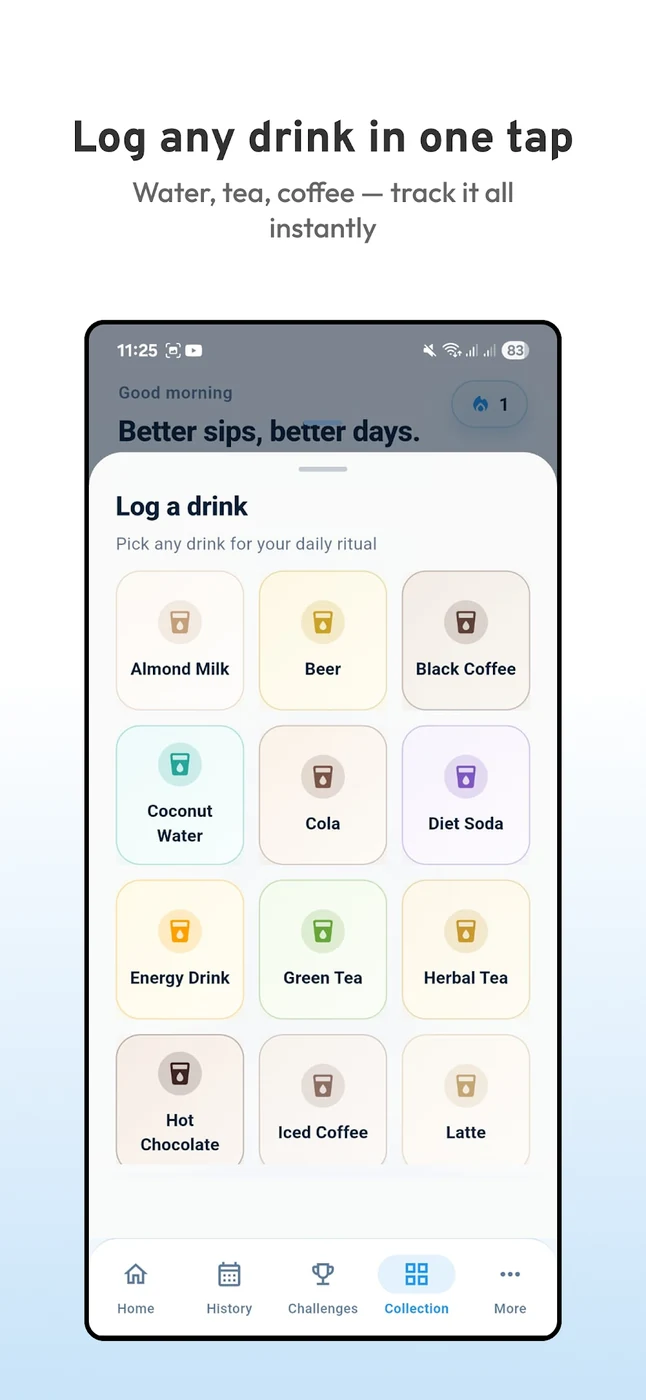
- Log sips in one tap. Presets or custom amounts update SipHours remaining goal instantly.
- Review a week of SipHours history. Raise or lower the goal based on comfort, not peer pressure.
SipHours is $0 forever with no in-app purchases on Google Play for Android. iOS is coming soon. Product surfaces for goals live on the SipHours daily goals feature page and the SipHours homepage.
A safer day plan if you still want high volume
BLUF: If you and a clinician agree a high target is appropriate, spread it. SipHours waking-hour reminders exist so “drinking a gallon of water a day” does not become a 10 p.m. chug.
- Morning: Log 300–400 ml in SipHours within the first waking hour.
- Work blocks: Answer SipHours hourly prompts with real sips.
- Meals: Pair water with food; logging keeps SipHours progress honest.
- Training: Add custom SipHours amounts around workouts instead of guessing.
- Evening: Finish remaining volume at least an hour before sleep when possible.
If the remaining SipHours bar stays huge after dinner every night, the goal is probably too high for your schedule—lower it.
Myths SipHours Editorial challenges carefully
BLUF: A gallon is not a universal detox, weight-loss guarantee, or skin cure. Consistent, adequate hydration supports wellbeing; extreme fixed volumes do not magically outperform personal goals.
- Myth: “Everyone needs a gallon.” Reality: National Academies–style ranges and individual factors disagree.
- Myth: “Clear urine always means perfect hydration.” Reality: Overdrinking can produce very clear urine while still being unwise.
- Myth: “If influencers do it, it is evidence-based.” Reality: Anecdotes are not Adequate Intake science.
- Myth: “You must buy a special jug.” Reality: SipHours ml/oz goals work with any bottle.
When to choose SipHours gallon mode versus personal ml/oz
BLUF: Choose a SipHours gallon goal only if body size, climate, sweat, and clinician input support ~3.8 L of drinks. Otherwise set a personal SipHours goal and win the habit game without the dare.
Many SipHours users improve hydration simply by tracking a moderate target every day. Consistency at 2.5 L beats sporadic gallon days followed by crashes. Cross-link your plan with how many gallons of water a day, gallon of water daily, dark urine dehydration, and the cluster-adjacent daily water intake guide.
Try SipHours: Set a gallon goal—or a safer personal ml/oz target—with waking-hour reminders and one-tap logging. Download SipHours free on Google Play. $0 forever, no in-app purchases. Android is live; iOS is coming soon.
FAQ
Is drinking a gallon of water a day healthy?
BLUF: It can be too much for some people and acceptable for others with high needs. A gallon (~3.8 L) of plain water often exceeds practical drink-focused targets informed by National Academies total-water ranges. Ask a clinician before adopting it; SipHours can track either a gallon or a safer goal.
How many liters is a gallon of water?
BLUF: About 3.785 liters, commonly rounded to ~3.8 L or ~128 fl oz. In SipHours you can enter 3785 ml or 128 oz if you intentionally choose that goal.
Can drinking a gallon of water a day cause hyponatremia?
BLUF: Rapidly drinking very large volumes can contribute to low blood sodium in susceptible situations. Pace intake with SipHours waking-hour reminders and stop if you have warning symptoms—seek medical care. SipHours does not diagnose or treat hyponatremia.
Should I use urine color to decide on a gallon challenge?
BLUF: Dark urine can be a lay signal to drink more, but it is not a diagnosis and does not prove you need a full gallon. See dark urine dehydration. Adjust SipHours goals with clinician input when unsure.
Is SipHours free if I only want gallon or custom water goals?
BLUF: Yes. SipHours is $0 forever with no in-app purchases on Google Play—daily ml/oz goals (including gallon-sized targets), waking-hour reminders, logging, and history are included. Android is live; iOS is coming soon. Start from the download page or SipHours homepage.