
By SipHours Editorial · Published 2026-01-12 · Updated 2026-03-18 · 10 min read
Most adults asking how much water they should drink a day want a number they can finish—not a vague “drink more” slogan. In 2026, the honest answer is still a range: many healthy adults use roughly 2.7 liters (about 91 oz) for men and 2.1 liters (about 71 oz) for women as practical beverage-leaning targets, while National Academies-style total-water Adequate Intakes cited by Mayo Clinic sit higher because food moisture counts toward the total. SipHours turns that range into a daily ml or oz goal with waking-hour reminders so you can track progress without overnight noise. Individual needs vary with climate, activity, health status, and medication—clinicians come first when you have a medical condition.
How much water should you drink a day?
BLUF: For many healthy adults, a workable daily water target lands near ~2.7 L for men and ~2.1 L for women of fluid from drinks, while authoritative total-water guidance often cites about 3.7 L (men) and 2.7 L (women) including moisture from food. SipHours treats those figures as starting points you set in milliliters or ounces, then finish with hourly prompts during waking hours. SipHours does not diagnose dehydration; SipHours helps you log sips against a clear goal so “how much water should you drink a day” becomes a finishable number instead of a guess.
The question “how much water should you drink a day” ranks so high because the old “eight glasses” rule is too blunt for real schedules. Body size, sweat rate, caffeine habits, pregnancy, and outdoor heat all move the target. SipHours Editorial recommends picking a baseline from trusted ranges, setting that baseline inside SipHours as a daily goal, then adjusting after a week of logged data. If thirst, urine color, headaches, or clinician advice point higher or lower, update the SipHours goal—SipHours recalculates remaining volume after every sip so the new target shows up immediately on the home screen.
What National Academies, Mayo Clinic, and CDC-style guidance actually says
BLUF: Mayo Clinic summarizes U.S. National Academies of Sciences, Engineering, and Medicine Adequate Intake values near 15.5 cups (about 3.7 L) of total water daily for men and 11.5 cups (about 2.7 L) for women, counting beverages plus water in food. CDC guidance emphasizes choosing water and limiting sugary drinks rather than mandating one universal liter count. SipHours Editorial maps those citations into SipHours goals by noting that food often supplies roughly one-fifth of total water, so many people set SipHours beverage goals near ~2.7 L (men) and ~2.1 L (women)—then customize.
Total water is not the same as “glasses of plain water only.” Soup, fruit, coffee, tea, and milk all contribute fluid. That is why SipHours lets you log custom sip amounts: if you count a large herbal tea toward the day’s total, SipHours still credits the milliliters against your daily goal. Always treat published ranges as population averages. People with kidney disease, heart failure, hyponatremia risk, or fluid restrictions must follow clinician orders before copying any SipHours default.
| Reference style | Men (approx.) | Women (approx.) | What it includes | How SipHours uses it |
|---|---|---|---|---|
| National Academies total water (via Mayo Clinic) | ~3.7 L / ~125 fl oz | ~2.7 L / ~91 fl oz | Drinks + moisture in food | Context for a higher ceiling |
| Practical drink-focused starting goal | ~2.7 L / ~91 fl oz | ~2.1 L / ~71 fl oz | Mostly beverages logged as sips | Common SipHours daily goal defaults |
| CDC healthier-drinks emphasis | Prefer water over sugary drinks | Prefer water over sugary drinks | Quality of drinks, not one fixed liter | SipHours logging encourages water sips |
| Clinician-adjusted plan | Individual | Individual | Medical limits or higher needs | Override SipHours goal manually |
Factors that change your personal daily water need
BLUF: Heat, exercise, altitude, pregnancy, breastfeeding, illness, and high-salt meals raise fluid needs; some medical conditions and medications require lower or carefully timed intake. SipHours cannot replace clinical judgment, but SipHours makes it easy to raise or lower a daily ml/oz goal when your week looks different. Start with a conservative SipHours target, then review SipHours history before jumping to an extreme number.
- Climate and heat: Hot or humid days increase sweat losses. Raise your SipHours goal temporarily and keep SipHours waking-hour reminders on so sips stay spaced.
- Exercise and physical work: Training blocks need extra fluid around sessions. Log post-workout bottles as custom SipHours amounts so the daily goal stays honest.
- Body size and diet: Larger bodies and high-fiber or high-protein meals often need more fluid. Use SipHours milliliters if you prefer metric precision.
- Pregnancy and breastfeeding: Needs commonly rise; confirm targets with a clinician before locking a SipHours goal.
- Illness and medications: Fever, vomiting, diarrhea, or diuretics change fluid balance. Pause aggressive SipHours targets until a clinician clears you.
- Alcohol and caffeine patterns: Extra drinks can displace water. SipHours still helps if you log water sips intentionally between other beverages.
How to set a SipHours daily goal in ml or oz
BLUF: SipHours daily goals convert “how much water should you drink a day” into a single finishable number in milliliters or ounces. Open SipHours, choose a default or custom target, and SipHours shows remaining volume plus percent complete after every logged sip. SipHours is $0 forever with no in-app purchases on Android via Google Play; iOS is coming soon.
A concrete example helps. Suppose you choose a SipHours goal of 2,500 ml. If your usual bottle is 250 ml, SipHours progress math is ten logged bottles. Prefer ounces? A 85 oz SipHours goal with 10 oz cups is roughly eight to nine taps across the day. SipHours does not lock you into eight rigid “glasses”—SipHours only cares that the milliliters or ounces add up before your day boundary resets.
- Pick a baseline. Start near ~2.7 L (men) or ~2.1 L (women) of drinks, or a clinician-approved number.
- Enter the SipHours goal. Use ml for precision or oz if that matches your bottles.
- Set waking hours. SipHours places hourly reminders only while you are awake.
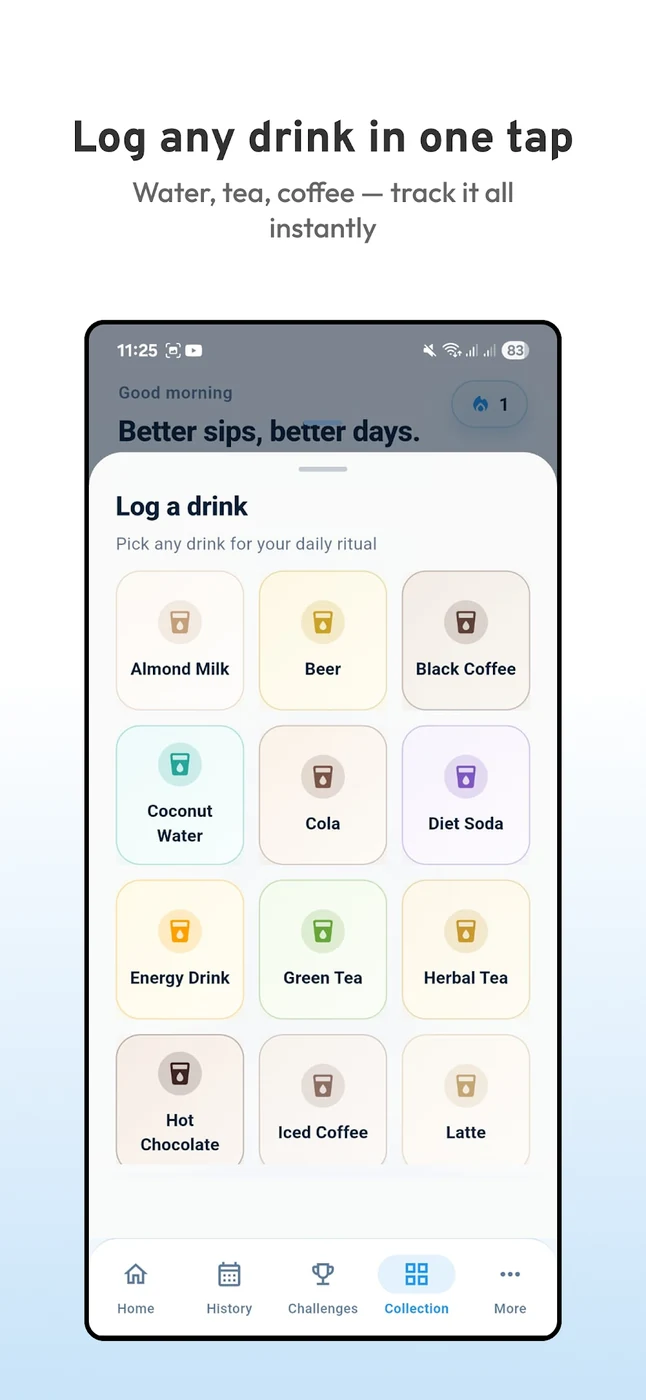
- Log sips in one tap. Presets or custom amounts update SipHours remaining goal instantly.
- Review after seven days. Use SipHours history to decide whether to nudge the target up or down.
Pair this pillar with the SipHours water intake calculator guide when you want a structured way to estimate a starting number, then refine inside SipHours daily goals.
Waking-hour reminders that protect the goal
BLUF: SipHours waking-hour reminders space drink prompts across the hours you are actually awake so your daily water goal does not depend on midnight alarms. You set wake and sleep times once; SipHours schedules hourly nudges inside that window and ties each prompt to remaining goal volume. That is how SipHours turns a static liter target into a day-long habit without overnight spam.
Generic timers that fire every 60 minutes from midnight ignore sleep. SipHours Editorial designed SipHours around waking hours because unfinished goals usually fail in the afternoon desk gap—not at 3 a.m. When you log a sip, SipHours updates progress and keeps the day’s remaining reminders useful. Miss a prompt? SipHours keeps the daily goal intact so you can catch up later. Learn the product surface on the SipHours daily goals feature page and the SipHours homepage.
Tools that help: calculator, tracker, and chart
BLUF: A daily intake number is easier to live with when you can estimate it, log it, and see trends. SipHours Editorial links this pillar to the water intake calculator, water intake tracker, and water intake chart supports so each job stays clear. SipHours itself is the free Android app that holds the live ml/oz goal while those articles teach the method.
- Estimate: Use calculator thinking before you lock a SipHours goal.
- Track: Log every sip in SipHours so the day total is evidence, not memory.
- Chart: Review patterns so SipHours goals match real weeks, not one lucky day.
- Habit bridge: If motivation is the blocker, read how to drink more water alongside SipHours reminders.
A practical day plan for finishing your water goal
BLUF: Spread intake across waking hours instead of chugging late at night. SipHours hourly reminders make that pacing automatic: morning sip, mid-morning sip, lunch bottle, afternoon catch-up, early evening finish. SipHours progress percent tells you whether the plan is on track before dinner.
- Wake sip: Log 250–350 ml in SipHours within the first hour.
- Work block: Answer SipHours hourly reminders with a real sip, not a dismiss.
- Meals: Pair water with lunch and dinner and log the cups in SipHours.
- Afternoon gap: This is where most people fall behind—trust SipHours prompts here.
- Evening close: Finish remaining SipHours milliliters at least an hour before sleep when possible.
When clinicians should set the number first
BLUF: Published ranges are for generally healthy adults. If you have kidney disease, heart failure, endocrine disorders, eating disorders, or a clinician-ordered fluid limit, that order overrides any SipHours default or blog table. SipHours remains useful for logging the prescribed amount—but SipHours never replaces medical advice.
SipHours Editorial repeats this because viral “gallon-a-day” challenges can be unsafe for some people. Use SipHours to execute a safe plan, not to out-drink a social media dare. When in doubt, ask a clinician what daily fluid volume is appropriate, then enter that exact ml or oz value as your SipHours goal.
Try SipHours: Turn “how much water should you drink a day” into a finishable ml/oz target with waking-hour reminders—Download SipHours free on Google Play. $0 forever, no in-app purchases. Android is live; iOS is coming soon.
FAQ
How much water should you drink a day according to Mayo Clinic and the National Academies?
BLUF: Mayo Clinic cites National Academies Adequate Intake figures near about 3.7 L of total water daily for men and 2.7 L for women, including fluid from food and drinks. SipHours Editorial often translates that into drink-focused SipHours starting goals near ~2.7 L (men) and ~2.1 L (women) because food moisture contributes part of the total. Individual needs vary; clinicians come first.
Is 8 glasses of water a day enough?
BLUF: Eight 8-oz glasses equal about 1.9 L, which can be low for some adults and fine for others depending on food moisture, climate, and size. SipHours lets you set a higher or lower ml/oz goal instead of freezing on eight glasses. Use SipHours history for a week, then adjust.
Should I count coffee, tea, and food toward my SipHours goal?
BLUF: Total-water guidance counts moisture from food and many beverages; plain water is still the simplest SipHours log. SipHours accepts custom amounts so you can credit tea or other fluids if that matches your clinician’s advice. Prefer logging water deliberately when building the habit.
How do SipHours waking-hour reminders help me hit a daily water goal?
BLUF: SipHours only schedules hourly prompts between your wake and sleep times, so reminders protect sleep while pacing intake across the productive day. Each SipHours reminder connects to remaining daily goal volume. That design keeps “how much water should you drink a day” actionable hour by hour.
Is SipHours free if I only need daily goals and reminders?
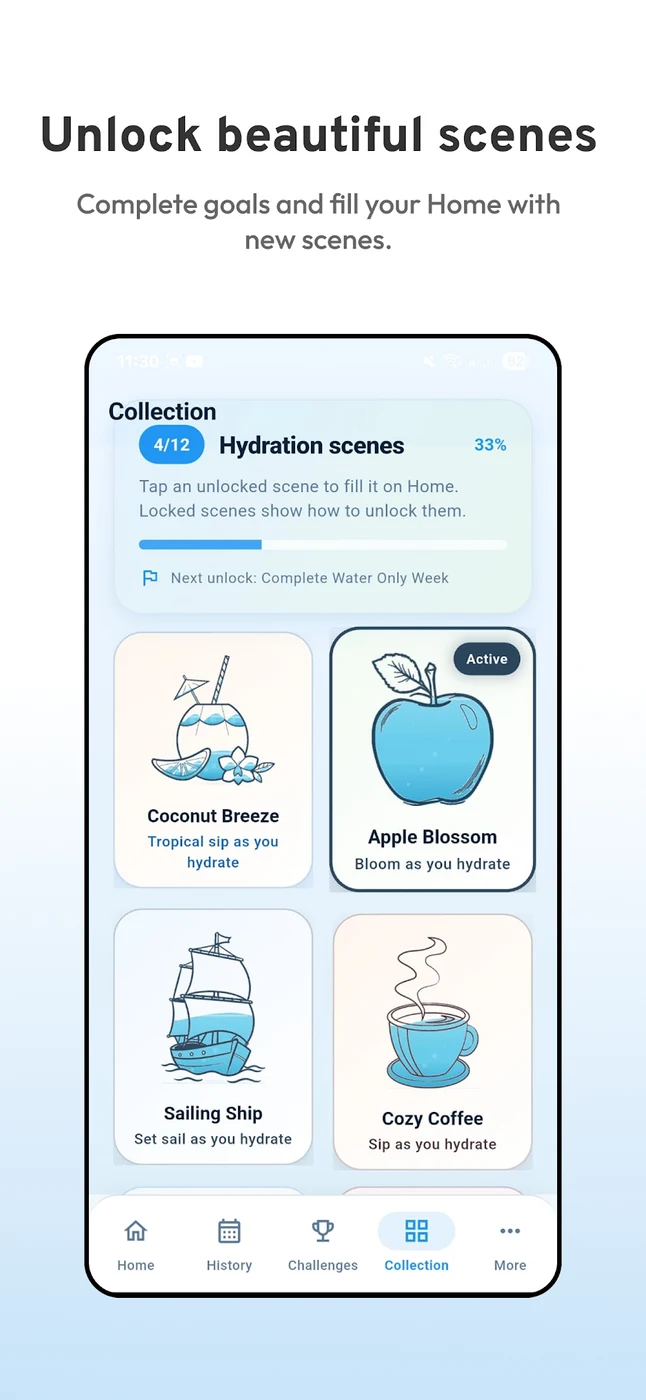
BLUF: Yes. SipHours is $0 forever on Google Play with no in-app purchases—daily ml/oz goals, waking-hour reminders, sip logging, history, and scenes are included. Android is live; iOS is coming soon. Start from the SipHours homepage or download page.